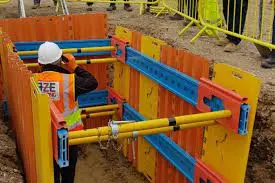

Choosing between aluminum and steel trench boxes usually comes down to one central tradeoff. Aluminum panels weigh a fraction of comparable steel panels, which changes what equipment a crew needs to move and place them, but that weight reduction comes with lower depth and soil pressure ratings than steel boxes deliver at comparable panel thickness. Understanding exactly where that tradeoff works in a contractor's favor, and where it does not, is the difference between selecting the right shoring equipment for a project and forcing a box into a job it was never rated for.
What Makes Aluminum Different From Steel Trench Boxes
Aluminum trench boxes use lightweight aluminum panels, often reinforced with internal ribbing or a honeycomb structure, to achieve protective ratings while keeping overall box weight dramatically lower than a steel box of similar dimensions. A steel trench box panel of a given size can weigh several times more than an aluminum panel built for the same excavation width, and that weight difference cascades through every part of a project, from what crane or excavator capacity is needed to place the box, to how many crew members are required for manual handling on smaller installations.
This weight advantage does not come free. Aluminum's lower material strength relative to steel means aluminum boxes generally carry lower maximum depth and soil pressure ratings than steel boxes of comparable panel dimensions, which is the central engineering tradeoff behind the material choice.
Depth and Soil Pressure Ratings: Where Aluminum Reaches Its Limits
Every trench box, regardless of material, carries a manufacturer-rated maximum depth and soil pressure capacity that a competent person must verify against actual site conditions before use, a requirement rooted directly in the OSHA excavation standards. Aluminum boxes typically top out at shallower maximum depths than comparable steel boxes, and in soil conditions that generate higher lateral pressure, that depth ceiling can be reached sooner than a crew accustomed to working with steel equipment might expect.
This is not a limitation that makes aluminum boxes inferior in a general sense. It means aluminum boxes are the right tool for a specific range of excavation depths and soil conditions, and pushing an aluminum box beyond its rated capacity for the sake of convenience is one of the more serious mistakes a crew can make on an active trench. The broader framework for understanding how OSHA classifies soil type and how that classification determines allowable shoring configurations is covered in our OSHA trench safety guidelines, which applies to aluminum equipment the same way it applies to any other shoring system.
Weight Advantages for Crews Without Heavy Lifting Capacity
The clearest case for aluminum trench boxes is on projects where the available lifting equipment, or the absence of heavy equipment entirely, makes steel box handling impractical. Utility repair crews working with smaller excavators, residential and light commercial projects where a large crane is not economically justified for the scope of work, and remote or tight-access sites where equipment mobilization options are limited all benefit from aluminum's dramatically lower handling weight.
On these projects, a crew can often place and remove aluminum boxes with equipment already on site for the excavation work itself, rather than needing to mobilize a larger crane or lifting attachment solely to handle a heavier steel box. This translates directly into lower mobilization cost and simpler logistics for jobs where the excavation depth and soil conditions fall within aluminum's rated capacity.
Corrosion Resistance and Long-Term Durability Considerations
Aluminum's natural resistance to corrosion is a secondary advantage that matters most for boxes used repeatedly in wet conditions or stored outdoors between projects. Steel trench boxes require coating maintenance and inspection for rust development over time, particularly at welds and panel edges, while aluminum boxes are inherently less susceptible to the corrosion patterns that steel equipment develops with prolonged moisture exposure.
This durability advantage does not eliminate the need for regular inspection. Aluminum boxes still require structural inspection for panel damage, fatigue at stress points, and connector wear the same way any shoring equipment does, a practice covered in more depth in our guide to shoring equipment maintenance and safety compliance. Corrosion resistance changes what a crew is inspecting for, not whether inspection is necessary.
Transportation and Storage Efficiency
Beyond the handling advantage on an active jobsite, aluminum's lighter weight also reduces transportation cost and simplifies storage logistics for contractors and rental operations managing a fleet of shoring equipment across multiple projects. Lighter boxes mean less strain on trailers and transport equipment, and for rental providers, faster loading and unloading between jobs where turnaround time affects fleet utilization.
Contractors weighing whether to purchase or rent shoring equipment for a given project scope should factor this transportation advantage into the broader decision, alongside the considerations covered in our trench box rental vs. purchase guide, since a fleet weighted toward aluminum equipment carries different transportation and logistics costs over time than an equivalent steel fleet, independent of the purchase or rental price of the boxes themselves.
When Steel Remains the Better Choice
None of aluminum's advantages change the fact that steel trench boxes remain the correct choice for deeper excavations, higher soil pressure conditions, or projects where the depth and soil profile exceed what any available aluminum configuration is rated to handle. Large-diameter pipe installations, deep utility work, and excavations in unstable or previously disturbed soil frequently call for steel's higher rated capacity regardless of the handling convenience aluminum would otherwise offer.
The broader decision framework for selecting between shoring system types based on depth, soil classification, and project scope is covered in how to choose the right trench box, which remains the starting point for any box selection decision before narrowing down to a specific material based on the weight and handling considerations covered here.
Cost Comparison Beyond the Purchase or Rental Price
Aluminum boxes typically carry a higher purchase price per unit of protective capacity than comparable steel boxes, reflecting the material cost and manufacturing complexity of achieving structural ratings with a lighter metal. This higher upfront or rental cost is frequently offset by lower mobilization expense, since a project that would otherwise require a larger crane solely to handle steel boxes may need no additional lifting equipment at all when aluminum boxes are within reach of equipment already on site.
Evaluating the true project cost requires looking past the box price alone to the full mobilization and handling picture, a consideration closely related to the broader cost factors covered in our article on trench box rental price factors. For smaller projects where mobilization cost represents a meaningful share of total shoring expense, aluminum's handling advantage can produce a lower total project cost even when the box itself carries a higher per-unit price than steel.
Matching Aluminum Trench Boxes to Utility and Municipal Work
Aluminum trench boxes see particularly strong adoption in utility repair and municipal maintenance work, where excavation depths are frequently shallower, crews often work with smaller excavators rather than large equipment fleets, and the number of individual excavations across a service area makes handling efficiency a meaningful factor in overall project economics. A water or gas utility crew responding to multiple service calls across a workday benefits directly from equipment that can be placed and removed quickly without waiting on a larger crane to become available.
For contractors and municipal crews evaluating shoring equipment for this type of recurring, moderate-depth excavation work, aluminum trench boxes frequently represent the most practical combination of adequate protective capacity and operational efficiency, provided the soil conditions and depth requirements at each site are verified against the equipment's rated limits before every use rather than assumed to be consistent across a service area.
Training Crews on Material-Specific Handling Differences
Crews accustomed to working exclusively with steel trench boxes sometimes carry assumptions into aluminum equipment use that do not transfer cleanly between the two materials. Panel connection points, lifting attachment procedures, and inspection criteria can differ between manufacturers and materials, and a crew's competent person should be familiar with the specific manufacturer documentation for whichever aluminum system is in use rather than assuming general trench box experience covers every detail of a different product line.
This is particularly relevant for connector and coupling hardware, where aluminum systems sometimes use different attachment mechanisms than steel systems to account for the different material properties involved. A brief walkthrough of manufacturer-specific assembly and inspection procedures before first use of a new aluminum system pays off in fewer field errors and a clearer understanding of exactly what the equipment is rated to do on that particular jobsite.
Final Thoughts
Aluminum trench boxes are not a universal replacement for steel shoring, and they are not a lesser option either. They are the right tool for a specific combination of excavation depth, soil pressure conditions, and handling logistics, and the weight advantage that makes them practical for utility work, tight-access sites, and crews without heavy lifting equipment is a genuine operational benefit rather than a compromise. The key to using aluminum trench boxes safely and effectively is matching their rated capacity honestly against actual site conditions on every job, rather than defaulting to whichever box happens to be easiest to move that day.